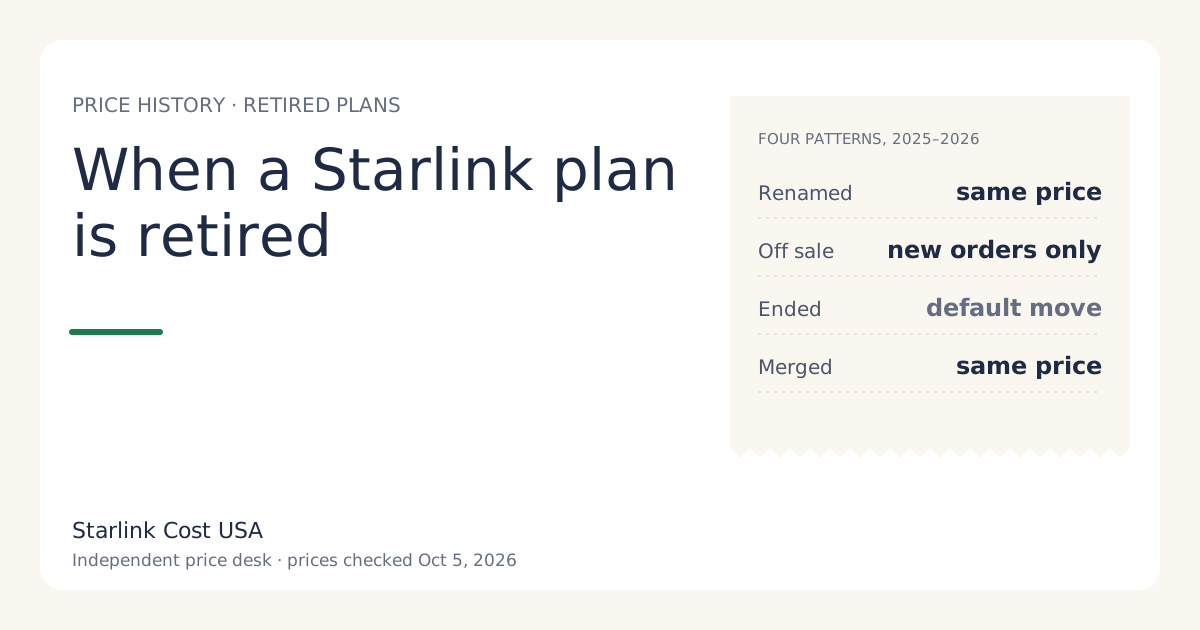
When Starlink retires a plan, the record since 2025 shows four outcomes: renamed at the same price, removed from sale for new orders, ended with notice and a default move, or merged into a larger plan at the same price. Only the third changed what existing subscribers paid on the day. Price increases have come as separate events. If your plan is going away, the money question is what you’ll be moved to and how that compares with every current tier at today’s prices.
This article sticks to the cost side, using our dated price history and the matching news posts. It doesn’t predict which plan goes next.
The four patterns in the record
| Pattern | Example | Existing customers’ price on the day | What came later |
|---|---|---|---|
| Renamed, same price | Residential Lite → Residential 200 Mbps, Jan 2026 | Unchanged at $80 | Raised to $85 in May 2026, separately |
| Removed from sale | A lower-priced 100 Mbps tier, Dec 2025 | Not stated in the reports | A new 100 Mbps tier returned at $50 in Jan 2026 |
| Ended, default move | Roam 10GB, Jan 2026 | Moved to Standby if they did nothing | Standby itself doubled in May 2026 |
| Merged into a bigger plan | Roam 50GB → Roam 100GB, Jan 2026 | Unchanged at $50 | Raised to $55 in May 2026 |
The first column of outcomes is the one that matters on the day the notice arrives. The second column shows why “my price didn’t change” isn’t the end of the story: in three of the four cases, a separate increase followed within months.
Pattern 1: renamed at the same price
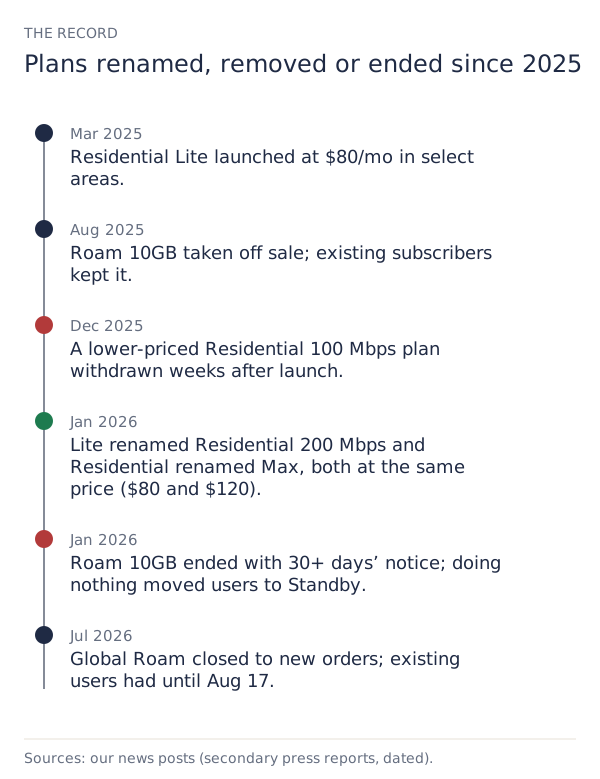
In January 2026 Starlink renamed its US home plans by speed. Residential Lite became Residential 200 Mbps and standard Residential became Residential Max. Benzinga’s dated report gave both the same prices as before: $80 and $120 a month. See the January 2026 post.
Cost effect on the day: none. What changed was the label, and in Lite’s case the speed wording: satelliteinternet.com noted the 200 Mbps tier was described with a lower cap than before. If a rename comes with a different speed or data term, that’s a change in what you get for the same price.
Pattern 2: removed from sale for new orders
A plan can disappear from the order page without anything happening to existing accounts that day. In December 2025, reports said a lower-priced Residential 100 Mbps plan could no longer be selected on Starlink’s US site a few weeks after it appeared in select areas (December 2025 post). Neither report said what happened to people already on it.
Roam 10GB followed the same first step in August 2025: off sale for new orders, kept by existing subscribers.
Cost effect: for new customers, the cheapest option goes up to the next tier. For existing customers, nothing on the day, but you’re now on a plan Starlink no longer sells, which is the usual first step toward pattern 3.
Pattern 3: ended, with a default move
This is the one that changes a bill. In January 2026 Starlink told remaining Roam 10GB subscribers their plan was ending, with at least 30 days’ notice, per RV Mobile Internet. Doing nothing moved them to Standby Mode; the alternative was a discounted move to the entry Roam plan for two months (January 2026 post).
The default was cheaper per month but gave up the high-speed data. The alternative kept high-speed data at a much higher price after the discount ended. Neither was the old deal, which is the general lesson: when a grandfathered plan ends, the old combination of price and features usually isn’t on offer anymore.
In July 2026, a Roam plan for long international travel was closed to new orders, with existing subscribers given until August 17 to move (July 2026 post). Roam plans are outside this site’s focus; we note it because it follows the same pattern.
Pattern 4: merged into a bigger plan at the same price
In January 2026 the entry Roam plan doubled its included data and existing users were moved over automatically at the same $50 a month (January 2026 post). The cost effect was neutral to positive for most users, with one catch: the per-gigabyte top-up option went away, so heavy users faced the jump to the next tier.
Retirement is not the price increase
It’s easy to remember 2026 as “they changed my plan and raised the price.” In the record, those were separate events four months apart:
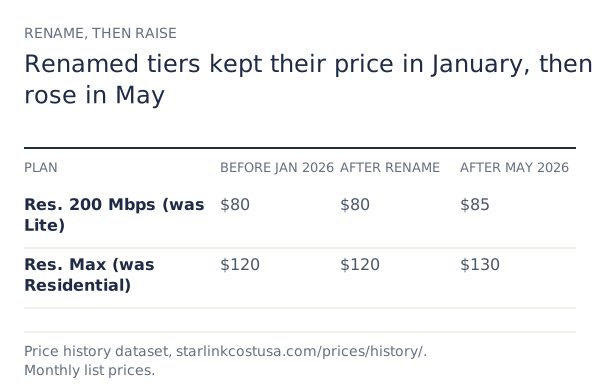
| Plan | Before Jan 2026 | After the Jan 2026 rename | After the May 2026 increase | Change per year |
|---|---|---|---|---|
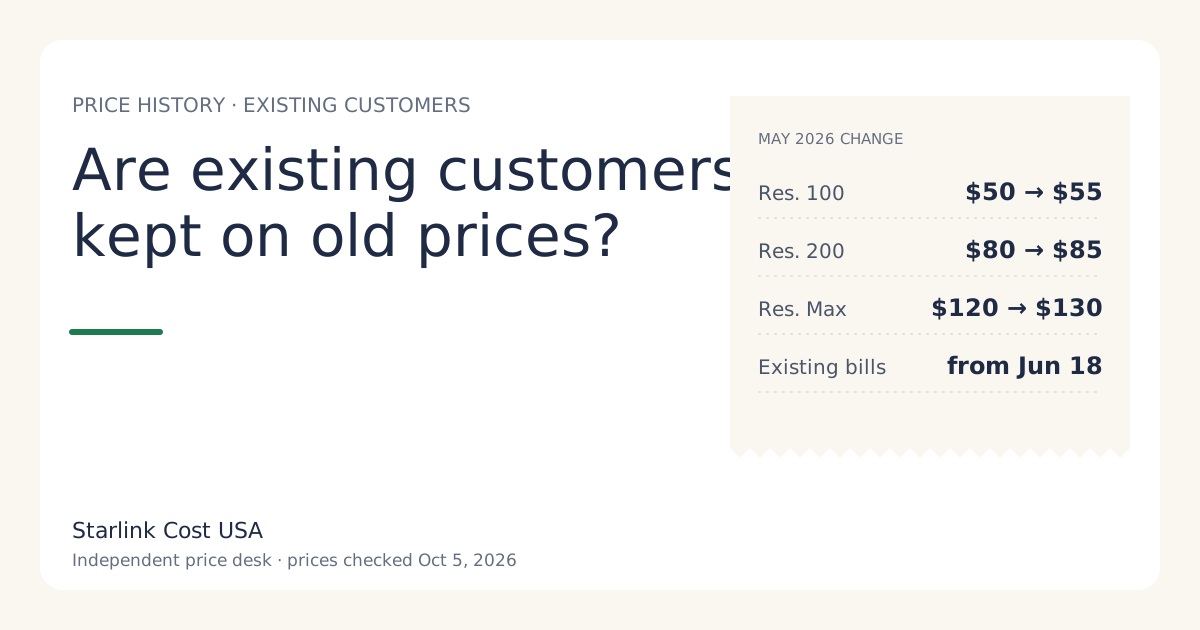
| Residential 200 Mbps (was Lite) | $80 | $80 | $85 | $60 more |
| Residential Max (was Residential) | $120 | $120 | $130 | $120 more |
Existing customers paid the May prices from bills on or after June 18, 2026. More on how increases reach existing accounts in are existing customers kept on old prices?
Worked example: your plan’s retirement notice arrives
Say you’re on a plan that’s ending, and the notice says you’ll be moved to Plan X unless you choose otherwise. A three-line check:
- Default cost per year: Plan X’s monthly price × 12. Note what you lose (speed, data, features).
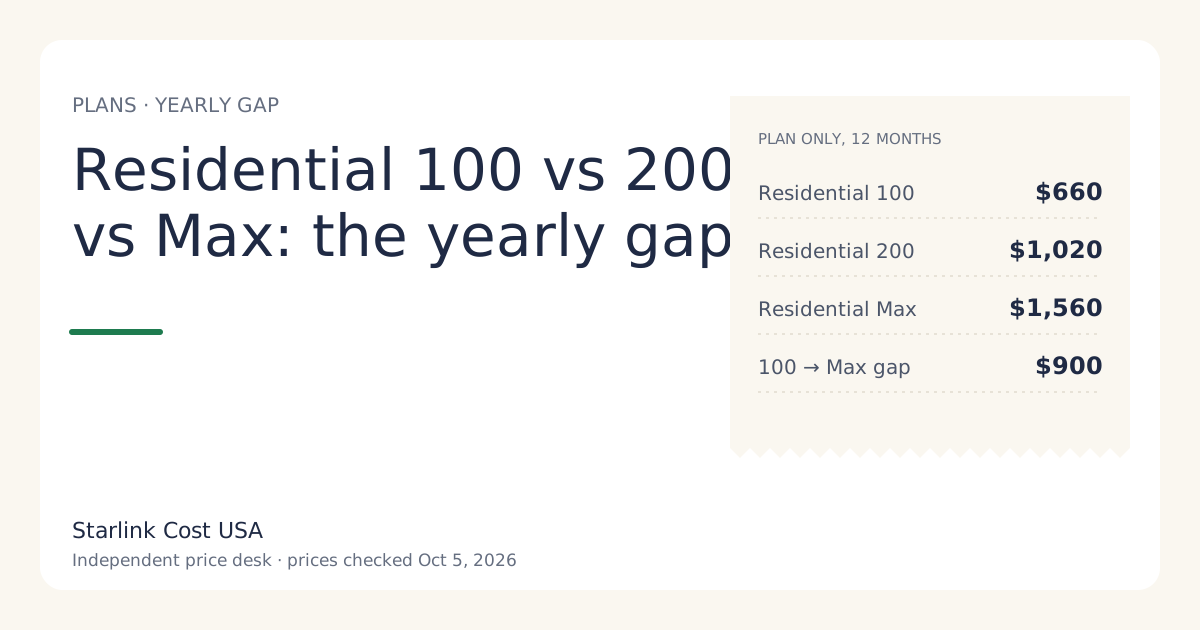
- Nearest current tier that matches what you had: its price × 12. On today’s Residential list that’s $660, $1,020 or $1,560 a year, checked Oct 5, 2026.
- Alternatives outside Starlink: your best other quote × 12, plus any equipment cost.
If the default is fine for how you use it, do nothing. If it isn’t, switch before the date so you’re not paying a month on the wrong plan. Plan changes have timing rules: see downgrading mid-cycle.
Common mistakes
- Assuming a renamed plan has the same terms. Compare the speed and data wording, not just the price.
- Ignoring a retirement notice and landing on a default you didn’t want.
- Treating “off sale” as “ended”. Existing subscribers often keep a plan for months after new orders stop.
- Blaming the rename for the increase. Separate events; check the dates in our price history.
What we don’t know
- What happened to existing customers on the lower-priced 100 Mbps plan withdrawn in December 2025. The reports didn’t say.
- Whether future retirements will come with the same 30-day notice. One case on record isn’t a rule.
- Which plans will be retired next. We don’t predict.
What to do next
- Check your plan’s exact name in the app or account and compare it with Starlink’s current plans page.
- If you’ve had a notice, run the three-line check above and the yearly totals in the calculator.
- Follow our news section for dated posts when a plan is renamed, removed or ended.