We can’t tell you whether Starlink will get cheaper, and anyone who says they can is guessing. What the dated US record since 2020 shows is a split: hardware got cheaper, the top monthly plan got more expensive, and the cheapest way in got cheaper because Starlink added lower-priced, lower-speed tiers. The Standard kit went from $499 at the 2020 beta to $349 list in 2024. The top Residential tier went from $99 a month to $130/mo today. Residential 100 Mbps, added in 2026, is $55/mo where offered.
The monthly plan: mostly up
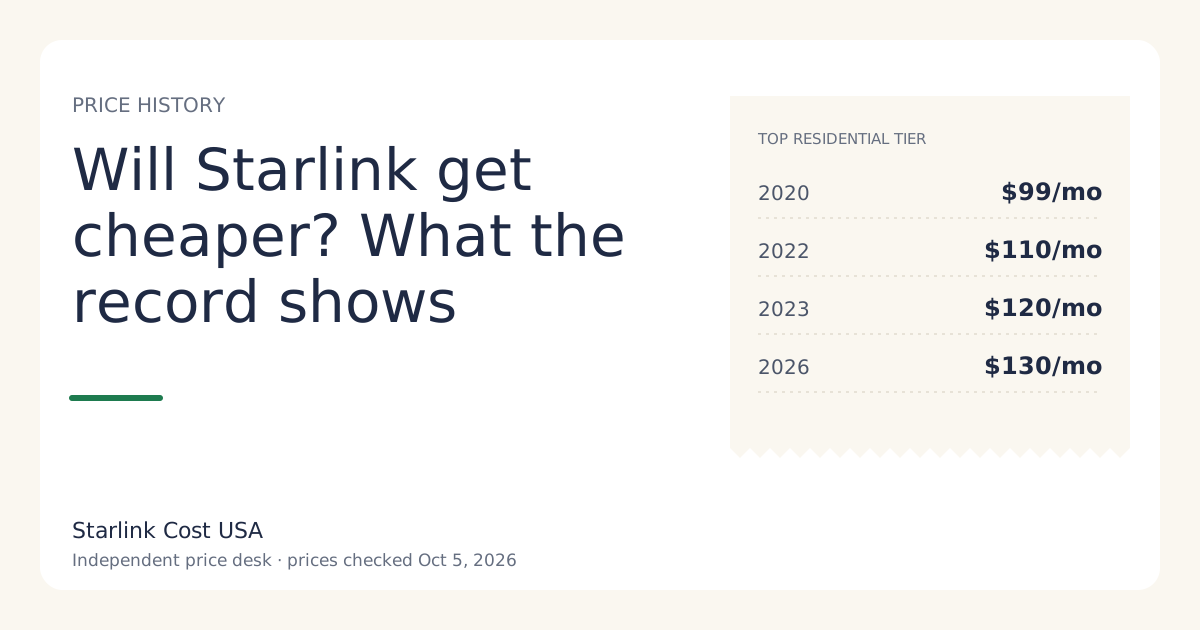
The top Residential tier, under its changing names (Residential, then Residential Max from January 2026):
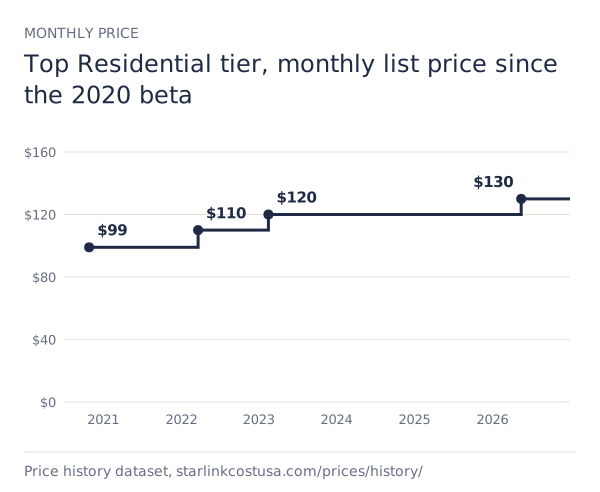
| Date | Change | Price |
|---|---|---|
| Oct 2020 | Public beta launch | $99 |
| Mar 2022 | Inflation increase, per CNBC | $110 |
| Feb 2023 | Split by capacity: higher in limited-capacity areas | $120 |
| Jan 2026 | Renamed Residential Max | $120 |
| May 2026 | Broad increase | $130 |
The 2023 change is a reminder that “the price” can depend on where you live: the record shows $120 in limited-capacity areas and a lower price where capacity was spare. That’s an early form of the address-based pricing you see at checkout today.
The kit: mostly down
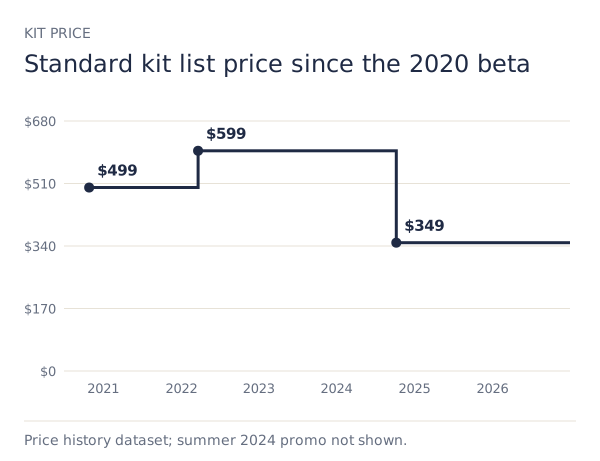
| Date | Change | Price |
|---|---|---|
| Oct 2020 | Public beta launch | $499 |
| Mar 2022 | Increase for new orders | $599 |
| Oct 2024 | New list price after a summer promo | $349 |
Our price file still lists $349 for the Standard kit today (secondary source), with a note that purchase isn’t offered at every address and some areas see a regional discount.
The portable Mini followed the same direction: $599 at its US launch in June 2024, then $249, and $149 “starts at” from October 2, 2026. Mini questions beyond price belong elsewhere; we track its price only.
The cheapest way in: new tiers
Instead of cutting the main plan’s price, Starlink added cheaper tiers with lower speed caps:
- March 2025: Residential Lite at $80, while Residential stayed at $120.
- January 2026: a restructure. Lite became Residential 200 Mbps, the old Residential became Residential Max, and Residential 100 Mbps arrived at $50.
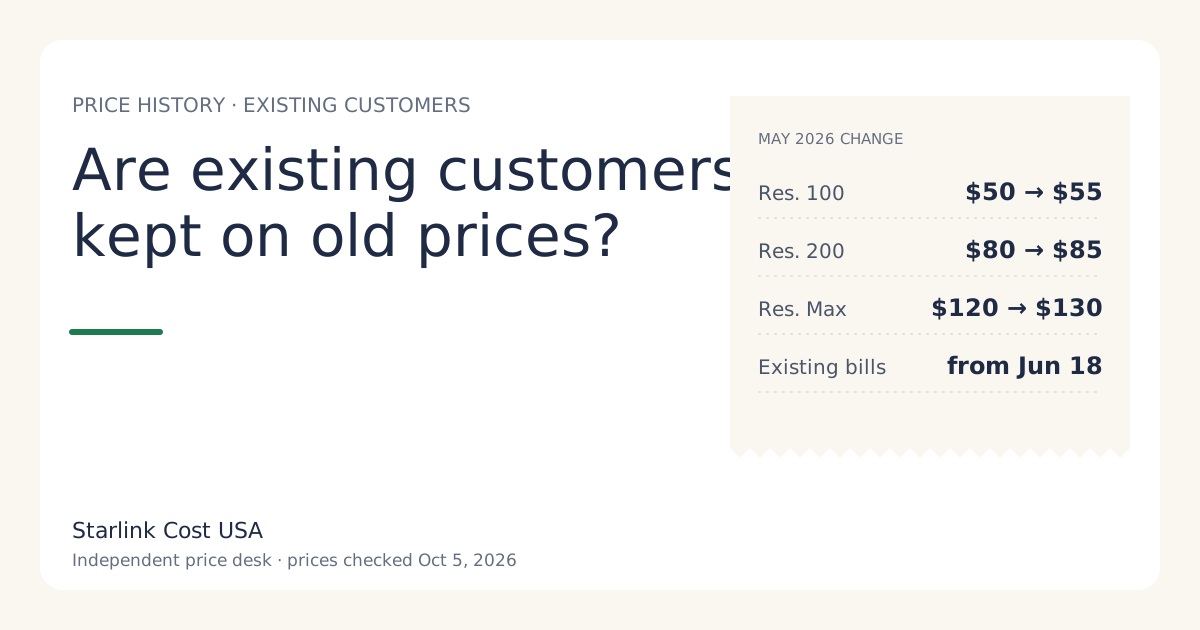
- May 2026: all three rose: Residential 100 Mbps to $55, 200 Mbps to $85, Max to $130.
So the lowest monthly price you can get today ($55/mo, select areas) is well below the $99 beta price. But it buys a different product: capped at 100 Mbps.
The extras: rental and Standby moved both ways
- Rental fee: $0 → $10 a month for new rentals in June 2026, then back to $0 in select areas in July 2026.
- Standby: free pausing was replaced by Standby at $5 in August 2025, which doubled to $10 in May 2026.
Small lines, but they show prices can move twice in two months.
What the record suggests for a buyer, without forecasting
- Don’t wait for the monthly price to fall. The top tier has never had a list-price cut in this record. If you’re waiting, you’re waiting for something that hasn’t happened in six years.
- Kit prices can drop, and they have, in steps. If you buy and the kit price drops within 30 days, a starlink.com order can be returned undamaged for full hardware refund if returned undamaged within 30 days. Whether a re-order then makes sense depends on any surcharge and the hassle.
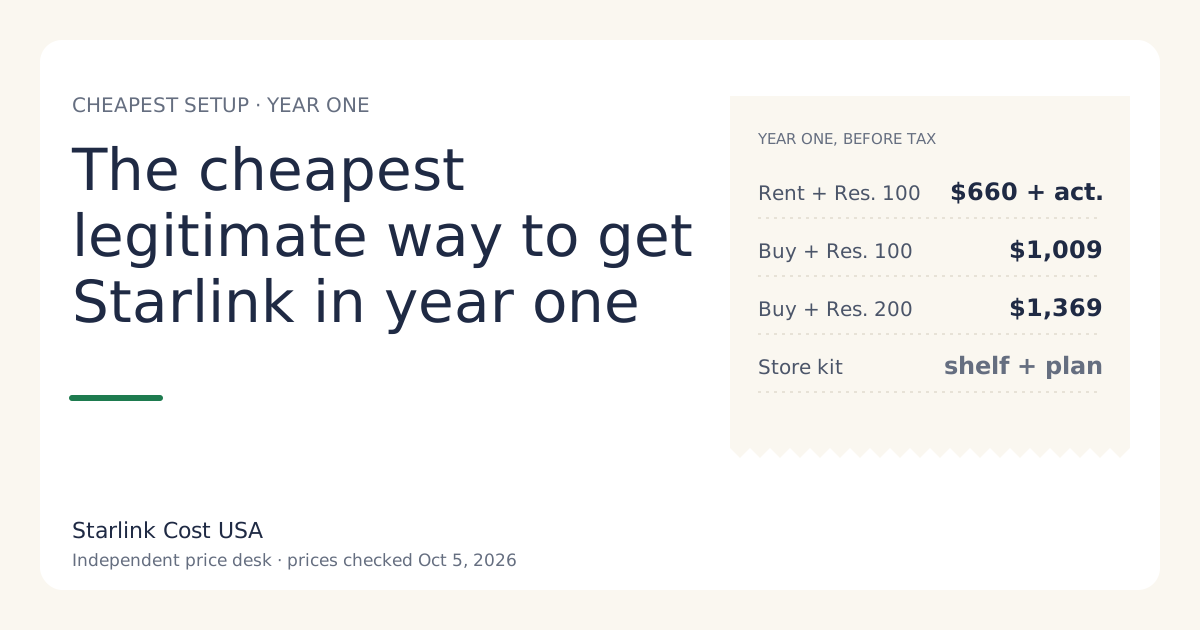
- The cheapest entry point is a tier choice, not a timing choice. Residential 100 Mbps at $55/mo where offered, or renting where the fee is $0/mo, lowers your cost today.
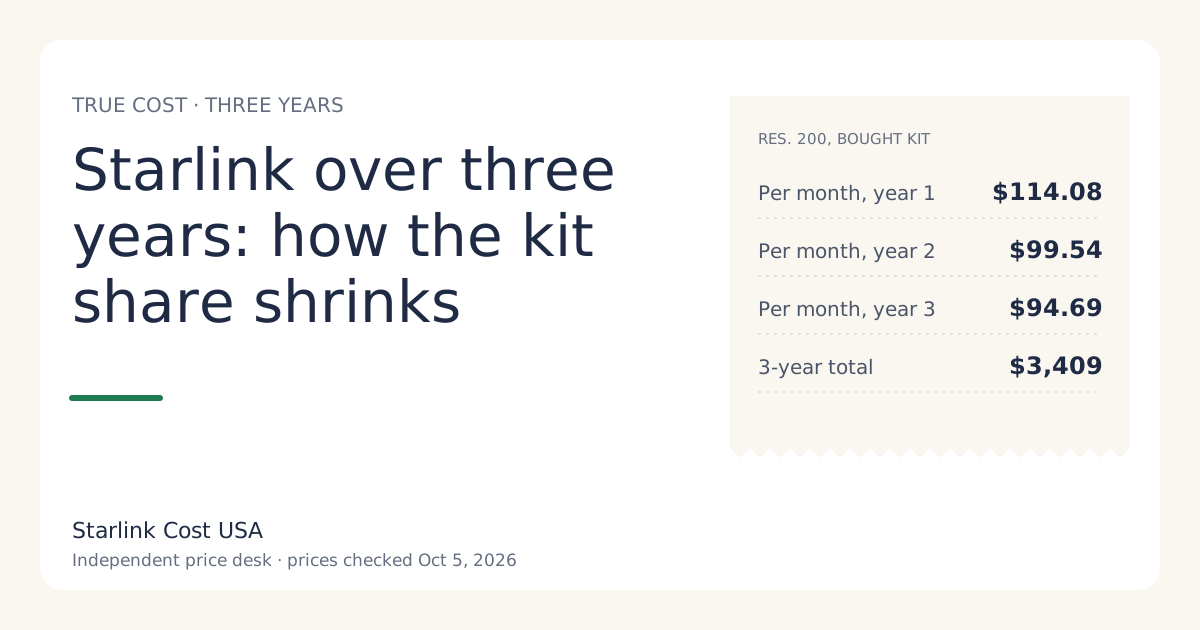
- Plan for increases in a three-year budget. Adding 10% to the plan line for years two and three is a simple stress test. See Starlink over three years.
The cost of waiting
Waiting isn’t free if your current internet doesn’t work for you. Put a number on a month of the status quo: hotspot data, lost work hours, trips to a library or café. If that number is bigger than the plan price, waiting for a hypothetical cut costs you money every month.
If your current service works well enough, waiting costs nothing, and you lose nothing by checking prices again in a few months. Our price news logs each change with a date.
Why we don’t predict
Starlink’s prices have moved for reasons it describes in its own announcements (inflation in 2022, “ongoing improvements and investment” in 2026) and for reasons it doesn’t explain. Competition, capacity and costs all play a part, and none of them are public enough to model. A forecast would be a guess dressed up as data. The record is real; that’s what we publish.
Common mistakes
- Reading an old price as today’s. Many pages still show pre-2026 prices; check the date.
- Comparing the 2020 beta price with Residential 100 Mbps as if they were the same product.
- Assuming a kit cut will apply to your existing order. It doesn’t, outside the 30-day return window.
- Waiting while paying for an expensive workaround.
What a year of the top tier cost at each price
Turning monthly prices into yearly ones makes the changes easier to feel. Twelve months of the top Residential tier at each list price in the record, before tax, plan only:
| Price in effect | Monthly | Twelve months |
|---|---|---|
| 2020 beta | $99 | $1,188 |
| From Mar 2022 | $110 | $1,320 |
| From Feb 2023 (limited-capacity areas) | $120 | $1,440 |
| From May 2026 (Residential Max) | $130 | $1,560 |
And the cheapest way in today, Residential 100 Mbps (select areas): $660 a year. These figures aren’t adjusted for inflation, and the products differ: today’s Max has a higher speed wording and includes free professional installation and eligibility for an extra Mini kit, while Residential 100 Mbps is capped at 100 Mbps.
Kit plus plan: year one then and now
Year one for a new buyer of the top tier with a bought kit:
- 2020 beta: $1,687 ($499 kit + 12 × $99).
- Today, Residential Max: $1,909.
- Today, Residential 200 Mbps: $1,369.
The cheaper kit has offset part of the higher monthly price in year one. Over three years, the monthly price dominates, which is why the direction of plan prices matters more than kit cuts for anyone staying long.
What we don’t know
- The next price move, its direction, or its timing.
- Whether regional promos will become more common.
- Prices of plans or kits not yet announced.
What to do next
- Look at the full price history, or download the CSV.
- Price today’s cheapest legitimate setup for your address: the cheapest way to get Starlink in year one.
- If you’re an existing customer worried about the next increase, read are existing customers kept on old prices?