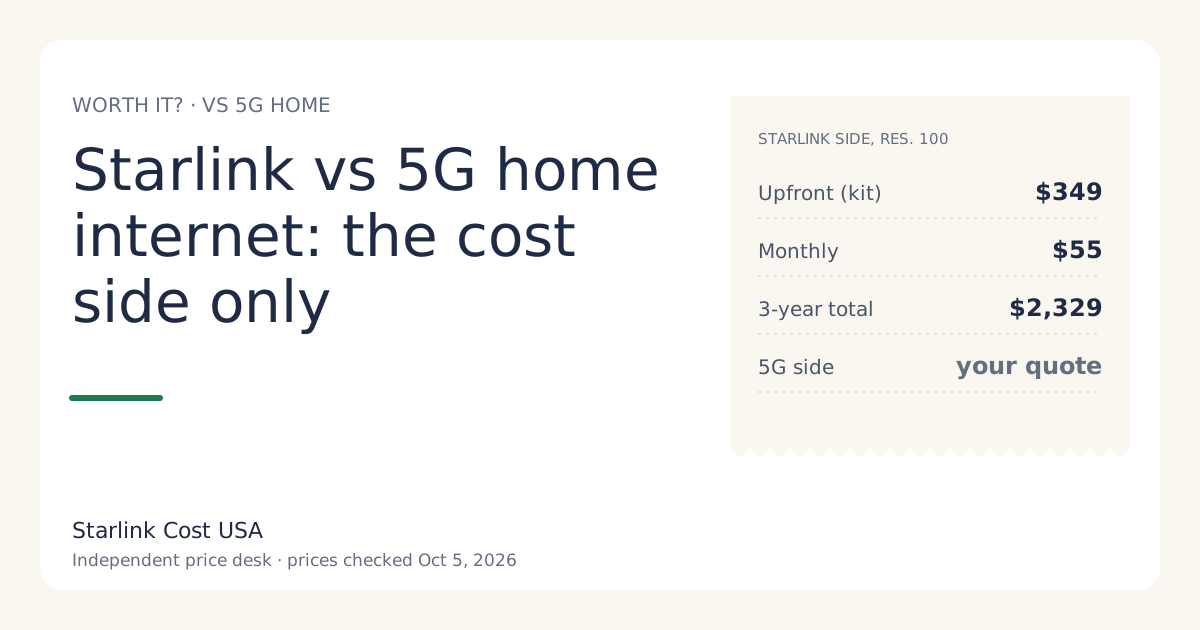
On cost alone, 5G home internet is usually cheaper up front and often cheaper per month, because most plans don’t require buying a dish. Starlink’s 36-month cost with a bought kit is $2,329 on Residential 100 Mbps (select areas) or $3,409 on Residential 200 Mbps, before tax, at list prices checked Oct 5, 2026. If a 5G quote for your address beats that over 36 months and the service tests well where you live, 5G is the cheaper choice. Starlink wins where 5G is weak, unavailable, or only cheap for a promo year.
We don’t track carrier prices: they vary by address, bundle and promo, and they change often. This article gives you the method and Starlink’s half of the numbers.
Why compare over 36 months
A monthly-price comparison favors whichever side has the lower sticker and hides three things:
- Upfront costs. Starlink’s kit ($349 list) or rental activation fee (varies by location; shown at checkoutunverified). 5G plans may include equipment or charge a fee.
- Promo expiry. Introductory prices that rise after 12 months change the 36-month total.
- Exit costs. Equipment you must return, or a kit you can resell.
Thirty-six months covers all three. Twelve months is useful for cash flow, but not for “which is cheaper”.
The worksheet
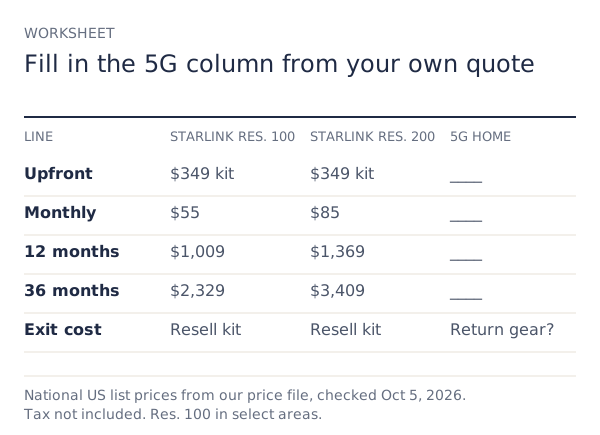
| Line | Starlink Res. 100 | Starlink Res. 200 | 5G home (your quote) |
|---|---|---|---|
| Upfront equipment | $349 kit | $349 kit | ____ |
| Monthly price | $55/mo | $85/mo | ____ |
| Months 1–12 | $1,009 | $1,369 | ____ |
| Months 13–36 | $1,320 | $2,040 | ____ (check promo end) |
| 36-month total | $2,329 | $3,409 | ____ |
| Per month over 36 | $64.69 | $94.69 | ____ |
| Exit | Keep or resell the kit | Keep or resell the kit | Return equipment? Fee? |
Starlink rental variant: where the rental fee is $0/mo, replace the kit with your activation fee. The 36-month total on Residential 200 Mbps becomes $3,060 plus activation, and the kit goes back when you cancel.
Add to both columns: tax (yours), and on Starlink any demand surcharge your checkout shows.
Filling in the 5G column honestly
When you get a 5G quote, write down:
- The monthly price you’ll actually pay, with or without autopay or a phone-line bundle. If the price depends on keeping a mobile plan, note what happens if you drop it.
- How long a promo price lasts, and the price after. Use the after-promo price for months 13–36.
- Equipment: included, rented monthly, or bought.
- Fees: activation, installation, taxes.
- Trial and return terms, so you know what trying it costs if it doesn’t work.
- Exit: any fee to cancel, and whether equipment must be returned.
Many US providers show a standardized “broadband facts” label with the monthly price and fees. If yours does, copy the numbers from it.
Worked example with a hypothetical quote
To show the method only, imagine a 5G quote of $50 a month for the first 12 months, then $60, no equipment cost, no fees. These are invented numbers for illustration, not a price any carrier is offering.
- 5G 36-month total: 12 × $50 + 24 × $60 = $2,040
- Starlink Residential 100 Mbps, bought kit: $2,329
- Starlink Residential 200 Mbps, bought kit: $3,409
In that example, 5G is cheaper by $289 against Residential 100 Mbps. Starlink would only make sense if the 5G service didn’t work well at the address.
Where each tends to win on cost
5G home internet tends to win when:
- A carrier offers it at your address and it tests well indoors or with an outdoor receiver.
- You want no upfront hardware cost.
- You’re staying a short time and want an easy return.
Starlink tends to win when:
- 5G isn’t offered at your address, or tests poorly.
- The 5G price only holds for a promo year and then rises above Starlink’s monthly price.
- You need service at a place far from towers, as long as there’s a clear view of the sky.
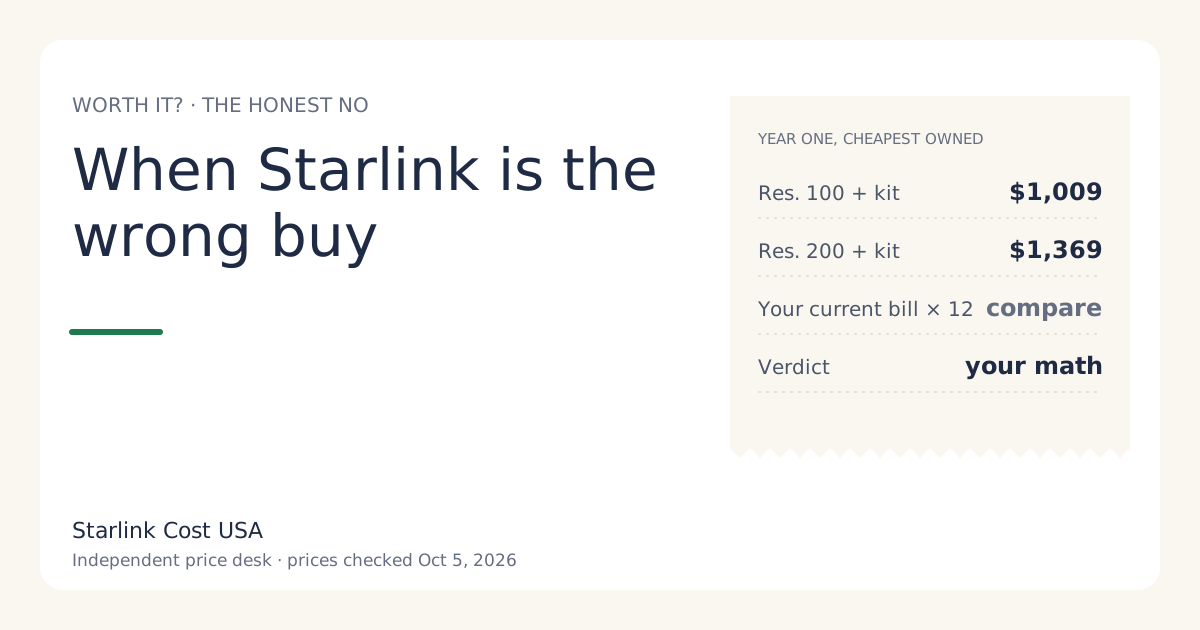
Neither wins when fiber or reliable cable is available for less. See when Starlink is the wrong buy.
Non-cost factors, in one line each
- Speed and latency: both vary by location and time of day; test at your address.
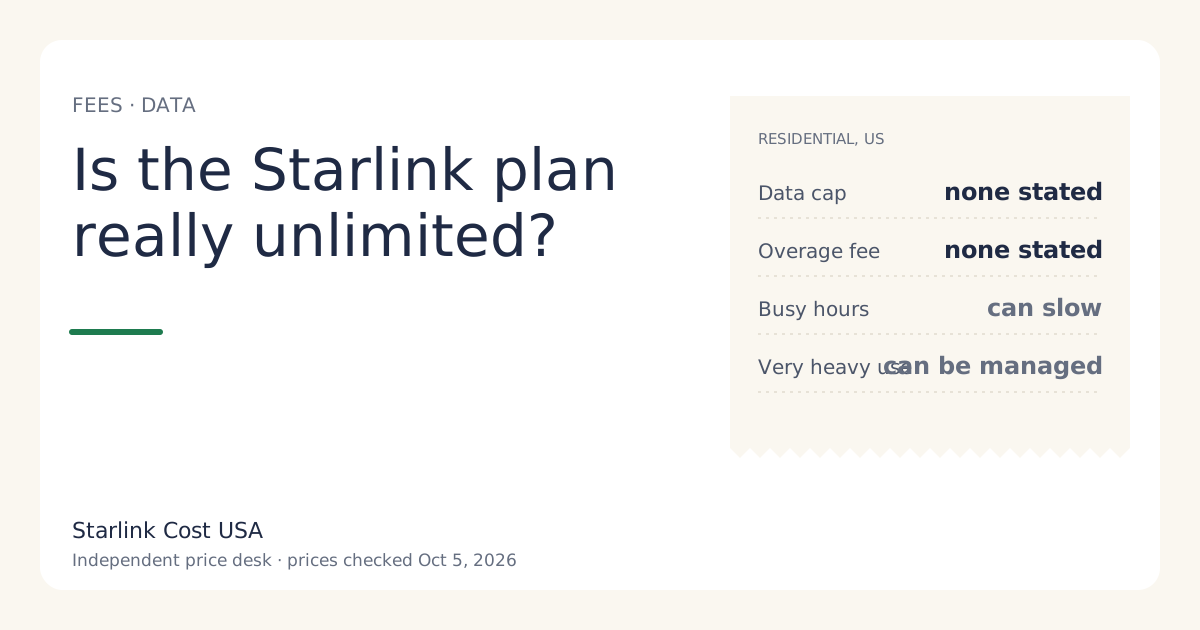
- Data: Starlink Residential is sold with unlimited data (see is the plan really unlimited?); check your 5G plan’s wording on priority and data.
- Weather and obstructions: Starlink needs open sky; 5G needs tower signal.
- Installation: Starlink needs a mount spot; 5G usually a window or outdoor unit.
Common mistakes
- Comparing promo month one with Starlink month one. Use 36 months and post-promo prices.
- Ignoring the kit’s resale value. We don’t promise a resale price, but a bought kit isn’t worth zero after three years.
- Forgetting Starlink’s possible surcharge in busy areas.
- Assuming 5G works because your phone works. Home 5G availability is checked by address; test the service.
Three scenarios, three answers
A household in a town with strong 5G coverage, no fiber. A 5G quote with no equipment cost and a stable price will usually beat Starlink’s 36-month total, because there’s no kit and the monthly price is often lower. Try 5G first.
A farmhouse ten miles from the nearest tower. 5G may not be offered at the address, or may test poorly indoors. Starlink’s $3,409 three-year total on Residential 200 Mbps (bought kit) may be the only workable number. The comparison becomes Starlink vs whatever you have now. See when Starlink is the wrong buy for the other alternatives.
A renter staying 8 months. Neither side should involve buying hardware if it can be avoided. A 5G plan with included equipment, or a Starlink rental where the rental fee is $0/mo (activation fee plus 8 × $85 = $680 + activation on Residential 200 Mbps), keeps the exit cheap.
Test both before committing
The cheapest comparison is one where you never pay for something that doesn’t work:
- Starlink: a kit bought on starlink.com can be returned undamaged within 30 days for full hardware refund if returned undamaged within 30 days. Check the obstruction tool in the Starlink app before ordering.
- 5G home: many carriers offer a trial or return window on their equipment; the length and conditions vary, so read them on your quote.
If you test one at a time, start with the one that has the lower upfront cost and the easier return. For most addresses where 5G is offered, that’s 5G.
What we don’t know
We don’t know carrier prices at your address, which promos you qualify for, or how well either service performs where you live. That’s why the 5G column is blank.
What to do next
- Get a 5G quote for your address and fill in the worksheet.
- Put Starlink’s side into the 36-month calculator with your tax and any surcharge.
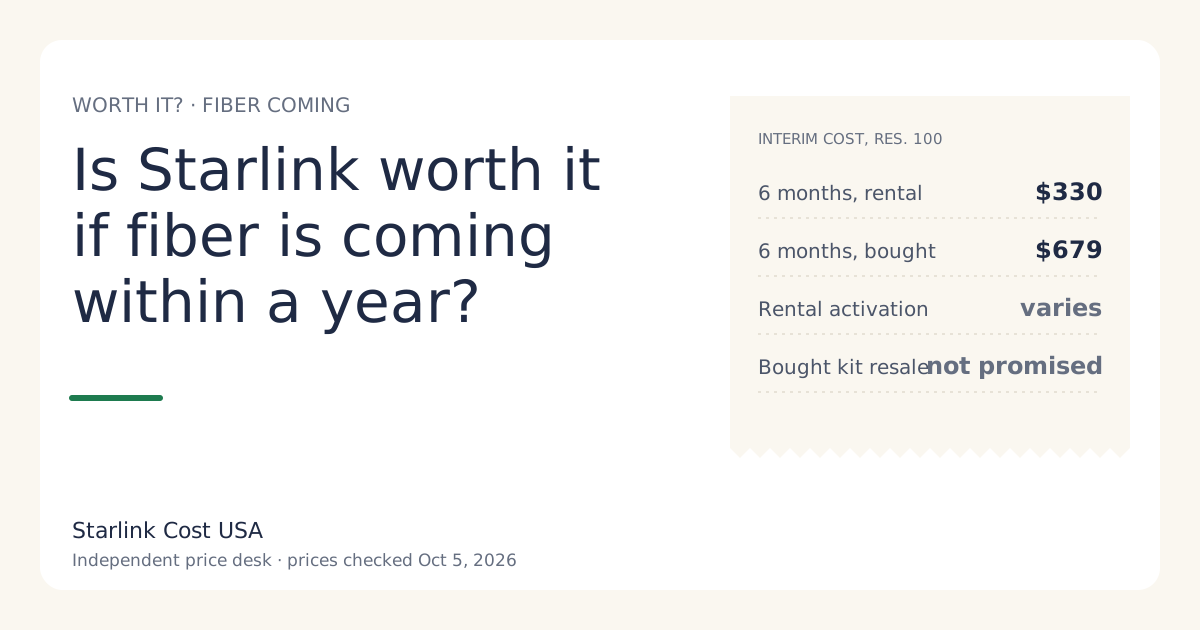
- If fiber might arrive soon, read is Starlink worth it if fiber is coming within a year?