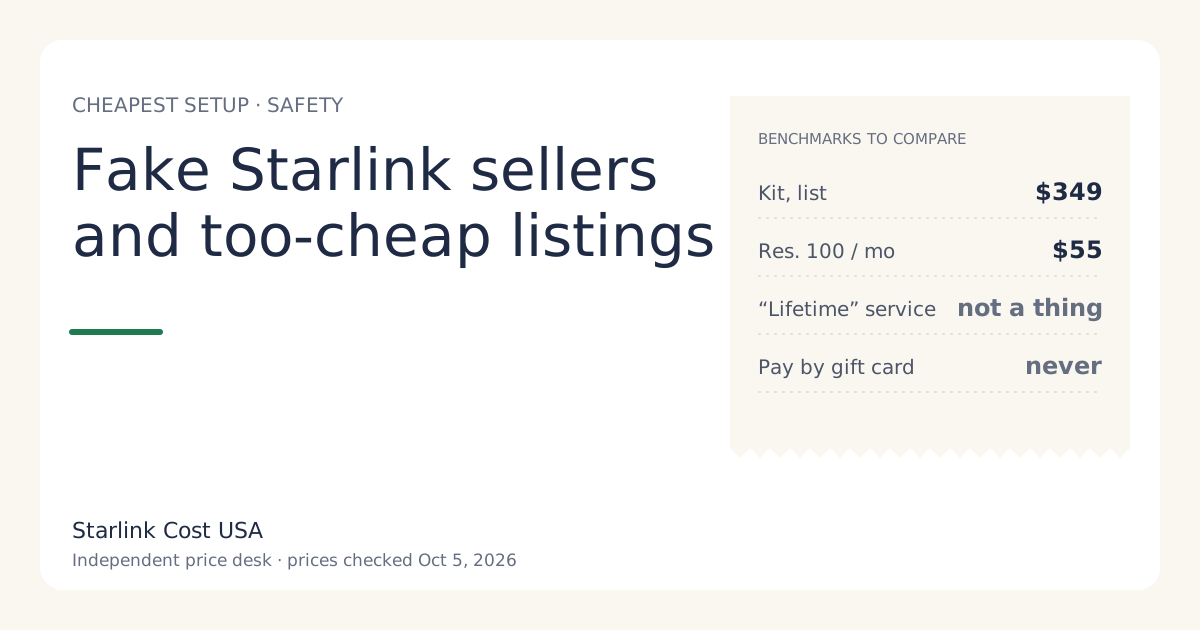
A Starlink listing is most likely a scam when the price is far below the $349 kit list price, the seller wants gift cards, crypto, a wire or a payment-app transfer, it offers “lifetime” or prepaid service, or it won’t share the kit’s serial number before you pay. The safest purchase is on starlink.com or a store’s own website or shelf, reached by typing the address yourself. Here are the benchmarks, the warning signs, and what to do if you’ve already paid.
Know the real numbers first
Scams work when you don’t know what something should cost. Today’s US list prices from our price file (checked Oct 5, 2026):
| Item | List price |
|---|---|
| Standard kit (buy) | $349 |
| Rental activation | varies by location; shown at checkoutunverified |
| Residential 100 Mbps (select areas) | $55/mo |
| Residential 200 Mbps | $85/mo |
| Residential Max | $130/mo |
Real discounts exist: our price file notes some areas see a regional kit discount, and stores set their own shelf prices. But they come from starlink.com or the store itself, not from a pop-up website or a stranger in a comment thread. Our price table always has the current numbers with dates.
Warning signs
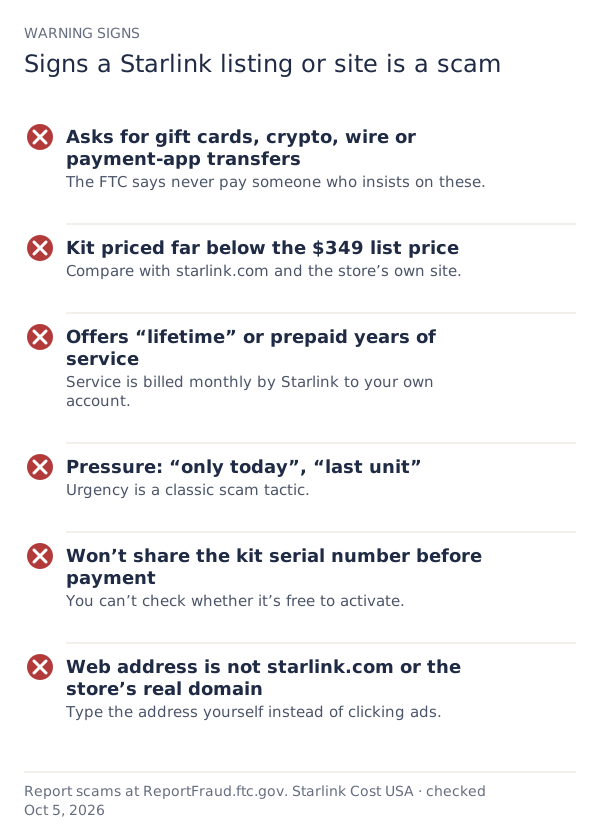
1. Unusual payment methods. The FTC’s guidance is direct: never pay someone who insists you pay with cryptocurrency, a wire transfer service like Western Union or MoneyGram, a payment app, or a gift card. No legitimate store asks you to buy gift cards to pay for a kit.
2. A price far below list. A kit at a fraction of $349 on an unfamiliar site is the most common lure. Check starlink.com and the big stores’ own sites. If nobody else is close, the “deal” probably isn’t real.
3. “Lifetime” or prepaid service. Starlink bills service monthly to your own account. A third party selling years of service, or a “no monthly fee” kit, is selling something you can’t verify and that Starlink doesn’t bill that way.
4. Pressure. “Only today”, “last unit”, “price goes up at midnight”. The FTC lists pressure to act immediately as a classic scam tactic. Real prices don’t vanish in an hour.
5. No serial number before payment. For a used kit, the serial or kit number is how you check it’s free to activate. A seller who won’t share it is a seller to walk away from.
6. A web address that isn’t the real one. Lookalike domains, extra words in the address, or a site reached through an ad. Type starlink.com or the store’s address yourself.
Used kits: the special risks
Private sales aren’t scams by default, but they have traps that cost the full kit price:
- Rentals for sale. A rented kit stays Starlink’s property. It can’t be sold, and you won’t be able to use it.
- Kits still on someone’s account. You can’t activate until the seller cancels and transfers it. Starlink’s support page says transfers aren’t allowed until 120 days after purchase or 90 days after activation, whichever comes first, and only with no balance owed.
- Stolen kits. A secondary guide warns about stolen or previously activated equipment. Check the serial on the activation page at starlink.com, as secondary guides suggest, before paying.
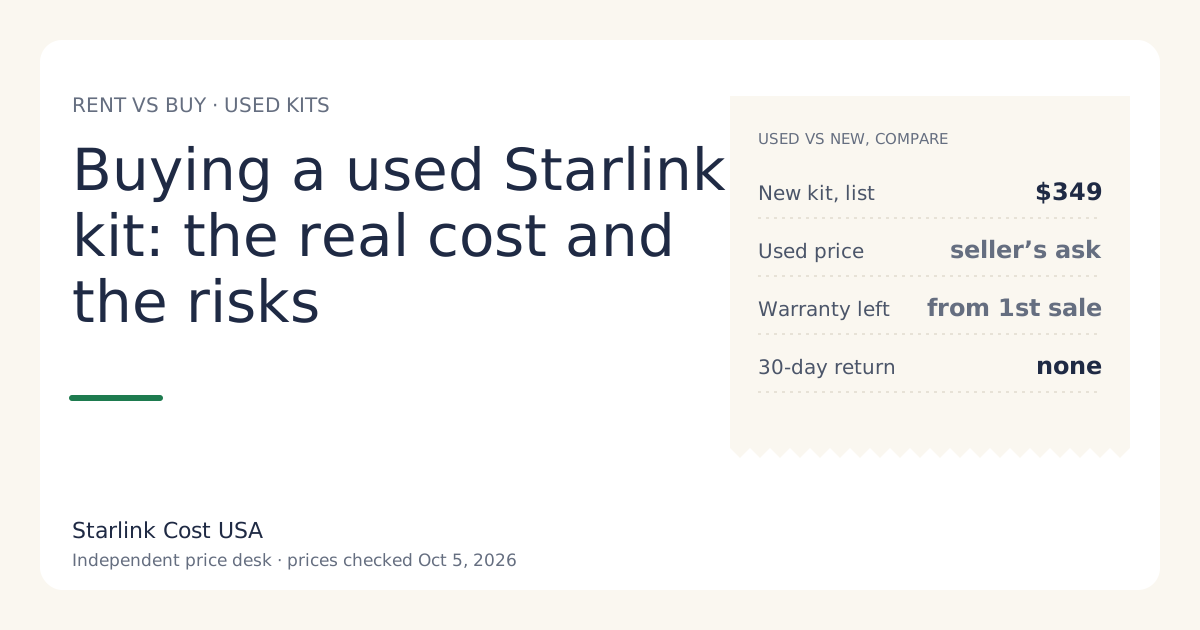
The full checklist is in buying a used Starlink kit.
Fake emails and texts about your account
If you’re already a customer, scammers may pose as Starlink about a payment problem or a price change:
- Don’t click links in unexpected messages about payment.
- Log in yourself by typing starlink.com, and check whether your account shows the issue.
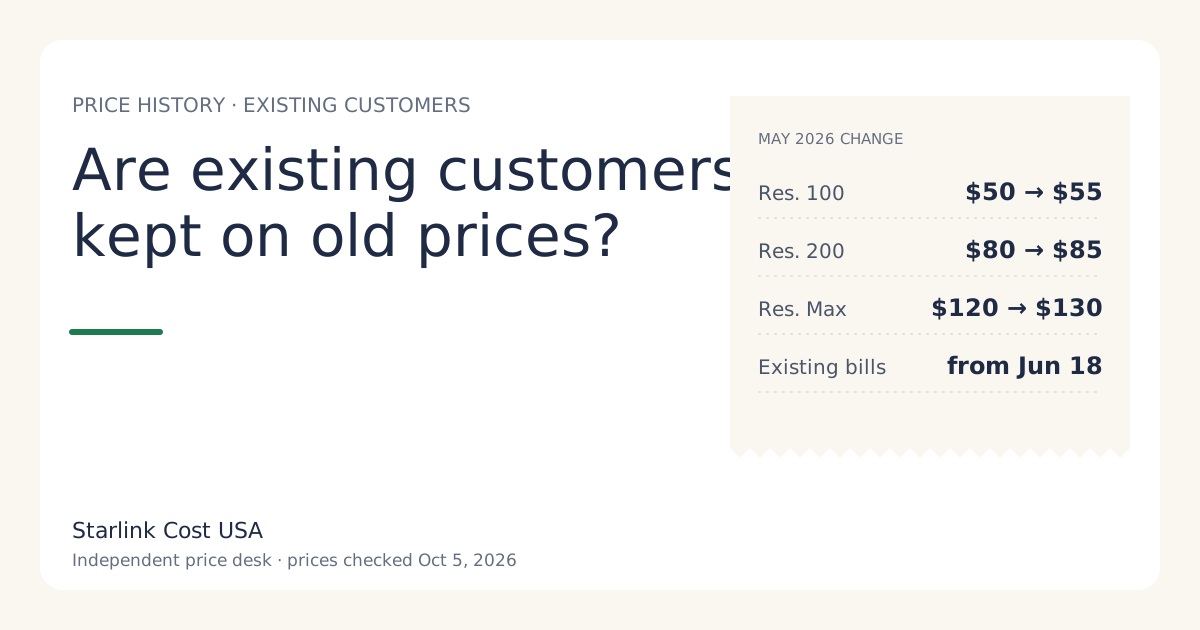
- Real price changes are public. The 2026 increase was widely reported and applied on bills from June 18, 2026. Our price news and price history log real changes with dates. See are existing customers kept on old prices?
If you’ve already paid
- Stop paying more. Scammers often come back for “shipping” or “customs” fees.
- Contact your card issuer or bank right away and ask about disputing the charge. Card payments generally offer more protection than the methods scammers prefer.
- Report it to the FTC at ReportFraud.ftc.gov, and to the marketplace or social site where you found the listing.
- Keep everything: screenshots of the listing, messages, payment receipts.
Legitimate ways to pay less
If the reason you were tempted was price, these actually work:
- The cheapest tier your address offers, Residential 100 Mbps at $55/mo where available.
- Renting where the rental fee is $0/mo: an activation fee instead of the kit price.
- A store’s own shelf price, compared in the store kit vs starlink.com tool.
- A used kit that passes every check.
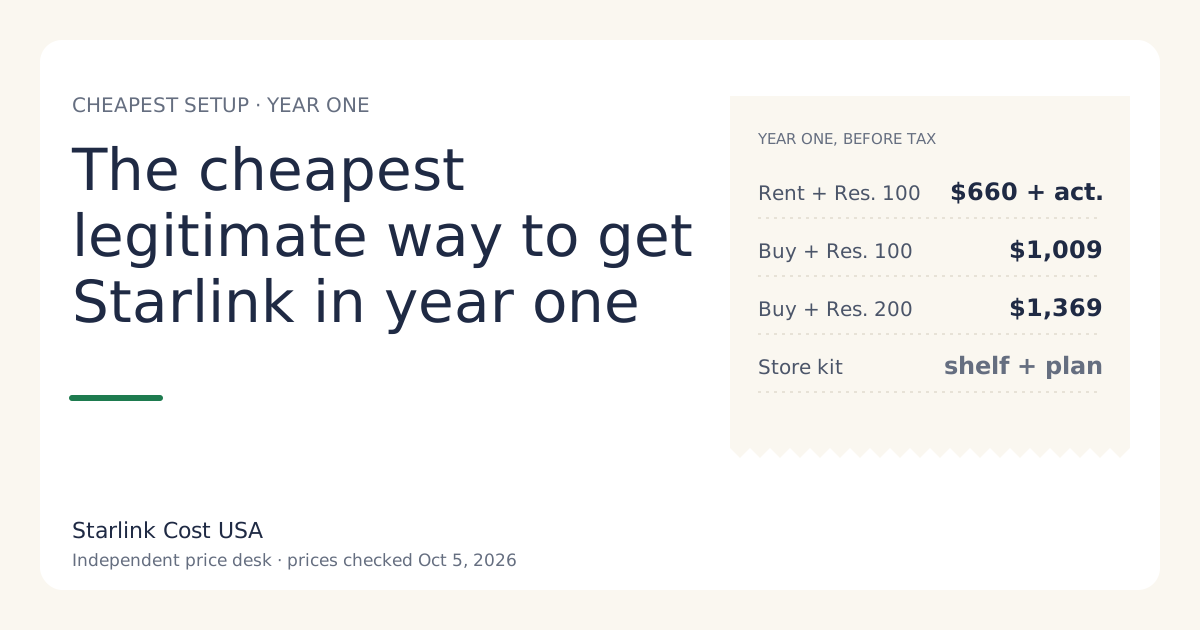
All ranked in the cheapest legitimate way to get Starlink.
Checking a seller on a marketplace or store site
Big retail sites often host third-party sellers next to the store’s own listings. A kit “sold by” a stranger on a well-known site isn’t the same as one sold by the store. Before buying:
- Look at who the seller is, not just which site you’re on. The listing usually says “sold by” or “ships from”.
- Check the seller’s history: how long they’ve been selling, and what reviews say about delivery and authenticity.
- Read the return policy for that seller. It may be far shorter than the store’s own.
- Compare the price with the store’s own listing and with starlink.com. If a third-party seller is far below both, ask why.
On social-media marketplaces and classified sites, treat every listing as a private sale: meet in person if you can, test the kit, check the serial, and never pay up front by a method without buyer protection.
Fake “support” contacts
Some scams don’t sell anything; they pretend to help. Searching for “Starlink support phone number” can surface ads or pages run by people who want remote access to your computer or a payment “to fix your account”. Reach support from inside your Starlink account or the app, not from a number in an ad or a social-media message. No genuine support process needs you to buy gift cards.
Worked example: judging a listing
A website you’ve never heard of offers a “new Starlink kit” at a quarter of the $349 list price, “plus 12 months of service included”, with a countdown timer, payment by bank wire only.
- Price: about $87.25 against $349 list. Far below any discount we’ve recorded in our price history.
- Service included: Starlink bills service monthly to your own account. A third party can’t include a year you control.
- Countdown: pressure.
- Wire only: one of the payment methods the FTC says to refuse.
Four red flags. Close the tab.
What we don’t know
- How common each scam is. We don’t have reliable data and won’t invent it.
- Every fake domain. They change constantly; the habit of typing addresses yourself beats any list.
What to do next
- Bookmark our price table as your benchmark.
- Buy on starlink.com or a store’s own site, or follow the used-kit checks.
- If something felt wrong, report it, even if you didn’t pay. It helps the next person.