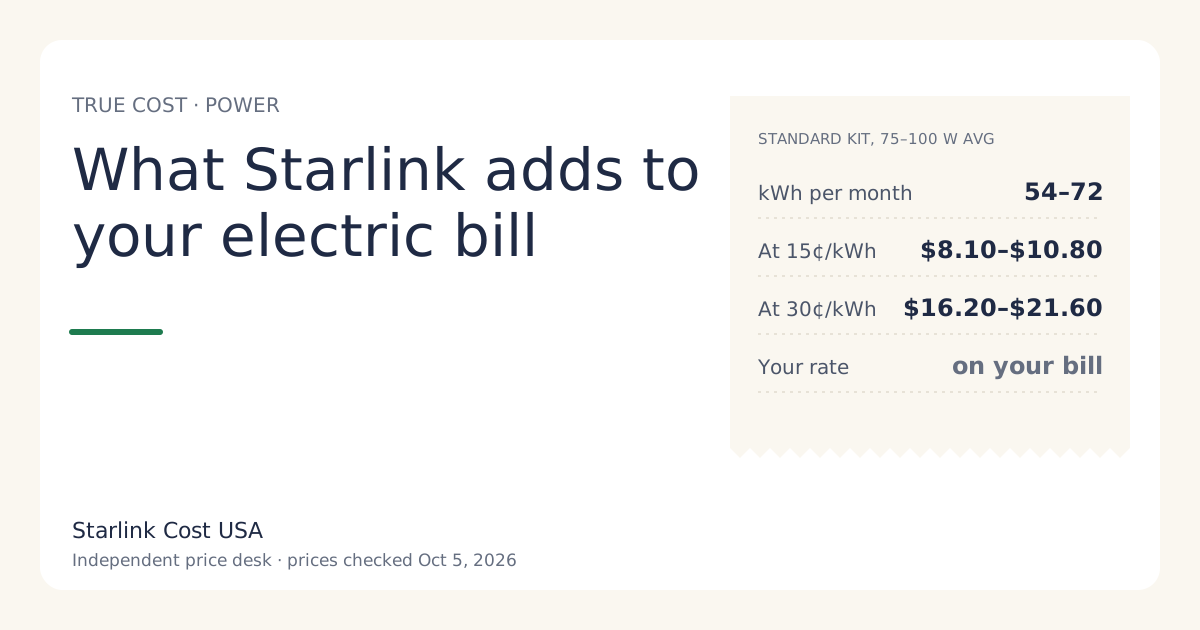
A Starlink Standard kit averages 75 to 100 watts, according to Starlink’s own spec sheet. Left on all day, that’s about 54 to 72 kWh a month, which costs roughly $8 to $11 at an example rate of 15¢ per kWh, or $16 to $22 at 30¢. Multiply 54 to 72 by the rate on your electric bill and you have your number.
That’s small next to the plan itself ($85/mo for Residential 200 Mbps at list prices checked Oct 5, 2026), so power rarely decides whether Starlink is worth it. It does matter for an honest total, and it matters a lot if you run off-grid.
The arithmetic
Three steps, all of which you can check yourself:
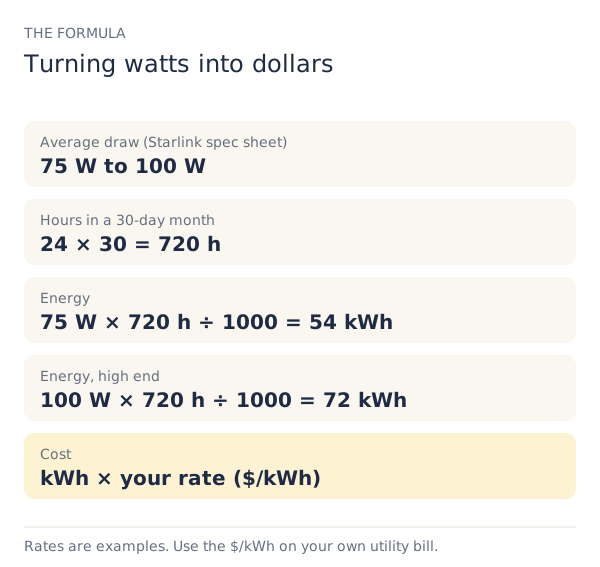
- Watts. Starlink’s specification sheet for the Standard kit lists “Average: 75 - 100 W”. That’s the dish and router together, as the kit is sold.
- Watts to kWh. A 30-day month has 720 hours. 75 W × 720 h ÷ 1,000 = 54 kWh. 100 W × 720 h ÷ 1,000 = 72 kWh.
- kWh to dollars. Multiply by your rate in dollars per kWh. Your utility bill shows it, often as “price per kWh” or a supply rate plus a delivery rate. Add the two if they’re split.
The cost at different rates
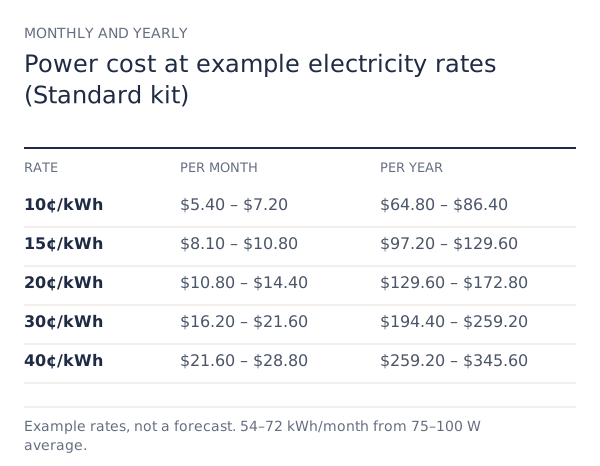
Electricity rates vary a lot by state and utility, so here’s the same kit at a spread of example rates. These are illustrations, not a claim about what anyone pays:
| Example rate | Per month | Per year |
|---|---|---|
| 10¢/kWh | $5.40 – $7.20 | $64.80 – $86.40 |
| 15¢/kWh | $8.10 – $10.80 | $97.20 – $129.60 |
| 20¢/kWh | $10.80 – $14.40 | $129.60 – $172.80 |
| 30¢/kWh | $16.20 – $21.60 | $194.40 – $259.20 |
| 40¢/kWh | $21.60 – $28.80 | $259.20 – $345.60 |
Why a range and not one number? The spec sheet gives a range for average draw, and real use moves within it with the weather, how hard the dish is working and how many devices are on the router. Use the low end for a mild climate and light use, the high end if you’re unsure.
Putting power into your total
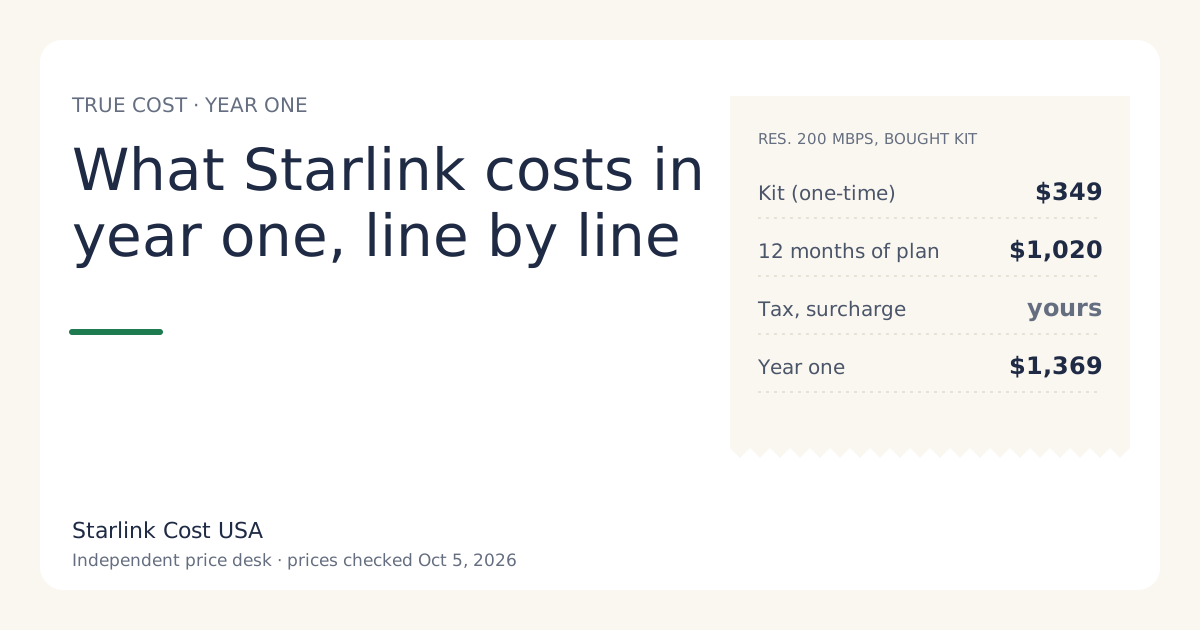
Here’s what power adds to the Starlink totals we use elsewhere on the site. Example: Residential 200 Mbps with a bought kit, at a 20¢ rate, mid-range draw (about 63 kWh a month, or $12.60).
| Starlink only | Power (example) | With power | |
|---|---|---|---|
| Year one | $1,369 | $151.20 | $1,520.20 |
| Three years | $3,409 | $453.60 | $3,862.60 |
Power adds around 11% to year one in this example. Worth knowing; rarely decisive.
Compare like with like. Your current internet gear uses power too: a cable or DSL modem plus a Wi-Fi router draws something, and that’s already in your bill today. If you switch, the extra power from Starlink is the difference, not the full 54 to 72 kWh. We don’t have reliable wattage figures for other providers’ gear, so check the label on your current modem and router (most list watts or amps).
When power really matters: off-grid and backup
On grid power, Starlink’s electricity is a line item. Off-grid, it’s a design constraint. A load of 75 to 100 W around the clock means 1.8 to 2.4 kWh a day that your solar panels and batteries have to supply, every day, including cloudy winter weeks.
On an off-grid system the cost doesn’t show up on a bill; it shows up in the size of the battery bank and panel array, and in generator fuel when the sun doesn’t cooperate. Sizing those systems is outside this site’s scope. What we can say on cost:
- Price the power system share honestly. If adding Starlink means adding a battery or panels, that’s part of its true cost.
- A UPS for outages is a one-time purchase, not a monthly cost. Size it to the 75 to 100 W draw and the minutes you want to ride through.
- The Mini is a lower-power kit sold for portable use. We cover its price only; power questions about it belong to a site that tests it.
Can you cut the power cost?
A few honest options, and one myth:
- Turning the kit off when nobody’s home saves power for those hours. At a 20¢ rate, eight hours off every night saves at most about $3 to $5 a month. You lose overnight updates, cameras and anything else that needs the connection.
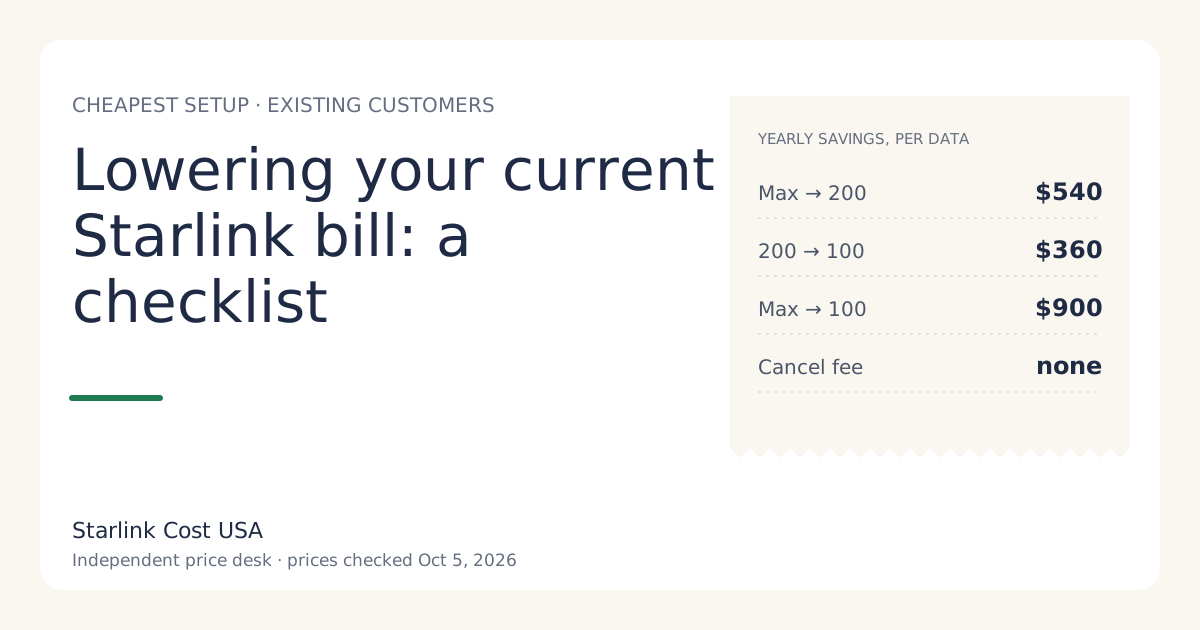
- Moving to a lower plan tier doesn’t change power use in any way we can document. The hardware is the same. A cheaper tier saves on the bill, not the meter: Residential 200 Mbps to 100 Mbps saves $360 a year where 100 is offered. See lowering your Starlink bill.
- Myth: unplugging the router alone saves most of it. The dish is the bigger load in the kit as specified; the router is a smaller share. We don’t have a published split, so we don’t put a number on it.
Snow, heat and the high end of the range
The dish includes a snow-melt feature. When it runs, draw rises above the everyday average. We haven’t found an official figure for how much a typical winter adds, and we won’t guess one. If you live where snow sits on roofs for weeks, use the top of the range (or a little above) for your winter months. Starlink’s app has settings related to snow melt; check them if your winter bills jump.
What we don’t know
- Exact draw for your kit. The 75 to 100 W figure is Starlink’s stated average for the Standard kit as specified in 2023; hardware revisions can differ. Check the label on your power supply or the specifications page for your kit.
- Winter snow-melt use over a full season.
- Your rate. Time-of-use plans and tiered pricing change the math. Use your average rate for a quick number.
What to do next
- Find your rate on your last electric bill and multiply by 54 and by 72.
- Get the Starlink side of the total from the calculator, then add your power figure.
- If you’re off-grid, cost the power system before the kit. If the total still makes sense next to your alternatives, read what Starlink costs in year one for the rest of the lines.